
Research Projects








Publications

CISA: The Journey to Zero Trust
Microsegmentation in Zero Trust Part One: Introduction and Planning
CSA Cyber Threat Psychology WG Abstract
CSA Cyber Threat Psychology WG Session 20250210
CSA Cyber Threat Psychology WG Session 20250224
CSA Cyber Threat Psychology WG Session 20250310
Cyber Threat Psychology Research Group

Department of Defense (DoD) Zero Trust Reference Architecture
The DoD Cybersecurity Reference Architecture (CS RA) documents the Department’s approach to cybersecurity and is being updated to become data centric and infuse ZT principles. ZT supports the 2018 DoD Cyber Strategy, the 2019 DoD Digital Modernization Strategy, the 2021 Executive Order on Improving the Nation’s Cybersecurity, and the DoD Chief Information Officer’s (CIO) vision for creating “a more secure, coordinated, seamless, transparent, and costeffective architecture that transforms data into actionable information and ensures dependable mission execution in the face of a persistent cyber threat.” 2 ZT should be used to re-prioritize and integrate existing DoD capabilities and resources, while maintaining availability and minimizing temporal delays in authentication mechanisms, to address the DoD CIO’s vision
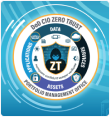
DoD Zero Trust Strategy
This Zero Trust strategy, the first of its kind for the Department, provides the necessary guidance for advancing Zero Trust concept development; gap analysis, requirements development, implementation, execution decision-making, and ultimately procurement and deployment of required ZT capabilities and activities which will have meaningful and measurable cybersecurity impacts upon adversaries. Importantly, this document serves only as a strategy, not a solution architecture. Zero Trust Solution Architectures can and should be designed and guided by the details found within this document.
ESAs publish first list of “Critical ICT Third-Party Providers” under DORA
ISACA Round Table 2025 Oct 07 Cyber Threat Psychology

NSA: Embracing a Zero Trust Security Model
As cybersecurity professionals defend increasingly dispersed and complex enterprise networks from sophisticated cyber threats, embracing a Zero Trust security model and the mindset necessary to deploy and operate a system engineered according to Zero Trust principles can better position them to secure sensitive data, systems, and services.

NSTAC Report
In May 2021, in the aftermath of a series of significant cybersecurity incidents, the White House tasked the President’s National Security Telecommunications Advisory Committee (NSTAC) with conducting a multi-phase study on “Enhancing Internet Resilience in 2021 and Beyond.” The tasking directed NSTAC to focus on three key
Zero Trust Architecture
This publication has been developed by NIST in accordance with its statutory responsibilities under the Federal Information Security Modernization Act (FISMA) of 2014, 44 U.S.C. § 3551 et seq., Public Law (P.L.) 113-283. NIST is responsible for developing information security standards and guidelines, including minimum requirements for federal information systems, but such standards and guidelines shall not apply to national security systems without the express approval of appropriate federal officials exercising policy authority over such systems. This guideline is consistent with the requirements of the Office of Management and Budget (OMB) Circular A-130.
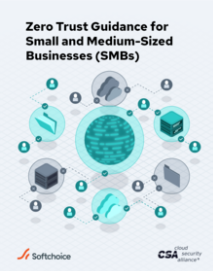
Zero Trust Guidance for Small and Medium Size Businesses (SMBs)
This publication provides guidance for small and medium-sized businesses (SMBs) transitioning to a Zero Trust architecture

Zero Trust Maturity Model
Zero trust provides a collection of concepts and ideas designed to minimize uncertainty in enforcing accurate, least privilege per-request access decisions in information systems and services in the face of a network viewed as compromised. The goal is to prevent unauthorized access to data and services and make access control enforcement as granular as possible. Zero trust presents a shift from a location-centric model to a more data-centric approach for fine-grained security controls between users, systems, data and assets that change over time; for these reasons. This provides the visibility needed to support the development, implementation, enforcement, and evolution of security policies. More fundamentally, zero trust may require a change in an organization’s philosophy and culture around cybersecurity.



CSA Global Research Topics
AI Safety Initiative
CSA’s AI Safety Initiative is the premier coalition of trusted experts who converge to develop and deliver essential AI guidance and tools that empower organizations of all sizes to deploy AI solutions that are safe, responsible, and compliant.
Learn MoreAI Technology and Risk
The AI Technology and Risk Committee is focused on staying abreast of the latest technological advancements in AI while simultaneously identifying, understanding, and addressing the associated risks and challenges.
Learn MoreAI Governance & Compliance
The AI Governance & Compliance Committee aspires to be the industry’s cornerstone for establishing, advocating, and disseminating governance and compliance standards for artificial intelligence.
Learn MoreAI Controls
The CSA AI Control Framework Working Group's goal is to define a framework of control objectives to support organizations in their secure and responsible development, management, and use of AI technologies.
Learn MoreAI Organizational Responsibilities
The AI Organizational Responsibilities Committee is committed to pioneering and setting industry standards for the definition of roles and responsibilities within security teams, specifically adapted to the emerging challenges and opportunities presented by AI technologies.
Learn MoreEnterprise Architecture
This group follows closely to the CCM working group in order to map the architecture domains that help enterprises identify critical components that are key to their cloud security architecture. These domains, when agreed upon to an adjacent CCM control domain, create a larger picture for easily implementing strategies.
Learn MoreBlockchain/Distributed Ledger
This group investigates relevant use cases and security implications of blockchain. Currently, they are creating a framework and glossary that would help provide guidance and security around: wallets, exchanges, cryptography, and more. We welcome anyone who would like to join, even if you would like to just listen in on your first call.
Learn MoreZero Trust
This working group aims to develop Zero Trust standards to achieve consistency for cloud, hybrid and mobile endpoint environments. The topic of group discourse include Zero Trust benefits, architecture, automation and maturity models, publication reviews, and relevant industry forums and events.
Learn MoreZero Trust Advancement Center
Zero Trust is one of the most widely talked about cybersecurity trends today. Zero Trust says no part of a computer and networking system can be implicitly trusted, including the humans operating it. Therefore, we must put measures in place to provide assurance that the systems and their components are operating appropriately, typically under a "least privilege" model and continuously verified.
Learn MoreDevSecOps
Our working group discusses the DevSecOps. We welcome anyone who would like to join, even if you would like to just listen-in on your first call.
Learn MoreTop Threats
This group aims to provide organizations with an up-to-date, expert-informed understanding of cloud security risks, threats and vulnerabilities in order to make educated risk-management decisions regarding cloud adoption strategies.
Learn MoreCSA Security Guidance for Critical Areas of Focus in Cloud Computing
Cloud computing offers tremendous benefits in agility, resiliency, economy, and security. However, the security benefits only appear if you adopt cloud-native models and adjust your architectures and security controls to align with the capabilities of cloud platforms.
Learn MoreCloud Controls Matrix (CCM)
It is composed of 197 control objectives that are structured in 17 domains covering all key aspects of cloud technology. It can be used as a tool for the systematic assessment of a cloud implementation, and provides guidance on which security controls should be implemented by which actor within the cloud supply chain. The controls framework is aligned to the CSA Security Guidance for Cloud Computing, and is considered a de-facto standard for cloud security assurance and compliance.
Learn More
No Available Content